
Even though Karna was born from the union of Suryadev and Kunti, why was he floated in the river?
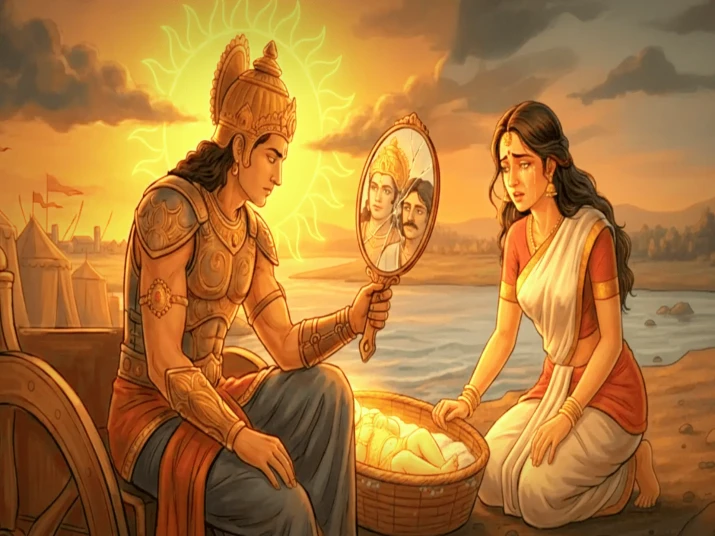
Table of Contents
- Even though Karna was born from the union of Suryadev and Kunti, why was he floated in the river?
- Despite being the son of Surya Dev, did Karna suffer from an identity crisis throughout his life?
- As the son of a Suta, what kind of discrimination did Karna face in society?
- Why is Karna called Danvir? How reasonable is the decision to donate his armor and coil to Indra?
- Why is Karna called Danvir? How reasonable is the decision to donate his armor and coil to Indra?
- If Karna had left Duryodhana's company, would the history of the Mahabharata have changed?
- Society's recognition vs. neglect: How did Arjun and Karna develop in different ways?
- How does Karna's identity crisis fit into the lives of some people in today's society?
- What is the role of ‘karma’ and ‘fate’ in Karna’s life? Was Karna truly a religious person?
- How did Duryodhana protect Karna's honor and make him the king of Angara?
- How did Karna introduce himself to Parashurama to learn weapons?
- How did Parashurama get angry with Karna, and what curse did he give him?
- Are there examples of talented but neglected people like Karna in today's society?
- When favoritism and friendship for the sake of power lead to self-destruction
- In today's society, are people neglected like Karna because of their birth, family identity, or financial status?
- How does not getting opportunities due to social identity, despite having qualifications, destroy talent?
- How can today's youth come out of humiliation or neglect healthy?
- Is it the responsibility of people like Karna to be given opportunities despite being talented: society or the individual?
- Why do you think Karnas are still being born in today's society?
- The greatest lesson for humanity from the tragedy of Karna's death and life
Even though Karna was born from the union of Suryadev and Kunti, why was he floated in the river?
The birth of Karna in the Mahabharata is a profound tragedy and a reflection of social reality. Although Karna was born from the union of Suryadev and Kunti, the main reason behind his being thrown into the river was the social system of that time, public shame, and Kunti's helpless situation.
Kunti was a teenager and unmarried. Curious to test a special mantra received from Durvasa Muni, she called Suryadev. Suryadev appeared and assured Kunti that her virginity would remain intact, and Karna was born from that union. Karna was born as a son of God and a Kshatriya, and even at the time of birth, he had golden armor and earrings on his body, which made him naturally invincible.
Nevertheless, a big problem arose before Kunti. In the society of that era, giving birth to a child by an unmarried woman was a serious social crime and a matter of shame. There was a danger that Kunti's honor and future as a daughter of a royal family would be completely jeopardized. The intense condemnation of society, the dishonor of the family, and the fear of his uncertain future forced him to take a cruel decision.
Despite Kunti's maternal compassion, she could not keep Karna with her. She put the child in a basket and floated it in the river. In the hope that by the grace of God, someone might rescue him and he would survive. This was not cruelty, but the last resort of a helpless mother.
Later, Suta Adhiratha and his wife Radha rescued Karna and raised him. But this decision had a profound impact on Karna's life. Despite being a Kshatriya by birth, he was known in society as Sutaputra. Which made him face lifelong humiliation and deprivation. In this way, Karna's floating in the river became not just a personal decision, but a symbol of the cruelty of the then social system.
Despite being the son of Surya Dev, did Karna suffer from an identity crisis throughout his life?
The three levels of personal, social, and moral reasons behind this are deeply intertwined.
First, the secrecy of birth is the root cause of Karna's crisis. Kunti received the boon of Surya Dev as a teenager and gave birth to Karna. Due to fear and shame from society, she abandoned the newborn Karna. As a result, Karna grew up in the house of the Suta couple, Adhirath and Radha. Since his true birth identity was unknown, Karna never received royal inheritance or recognition as the son of God. His identity was built on a social lie from birth.
Second, the social system and caste discrimination gave Karna a permanent form of identity crisis. Despite his royal qualities, extraordinary bravery, and proficiency in weaponry, he was neglected as a Suta son. Not getting full recognition from Dronacharya and other gurus, being humiliated in comparison with Arjuna, all these things reminded him repeatedly that in society, birth identity is the main thing, not merit.
Third, self-esteem and pride intensify Karna's inner conflict. In response to insults and neglect, he becomes desperate to prove himself. This opportunity leads him to Duryodhana's control, where he receives respect. But in exchange for that respect, he has to stand against justice. In the struggle to establish his identity, he gradually begins to prioritize recognition over truth.
Fourth, Karna's crisis is finalized by not accepting it even after knowing the truth. When Kunti reveals his true identity before the war, Karna still does not receive it. Because by then his identity has become inextricably linked not only to birth, but also to self-respect, promises, and friendship. Accepting the truth meant breaking the identity he had built, which he could not do.
Therefore, Karna's identity crisis is not just a tragedy of one person. It is a symbol of the inequality of society, the hidden truth, the conflict between self-respect and recognition. Despite being the son of the sun god, he spends his entire life searching for the answer to the question 'who is he'.
As the son of a Suta, what kind of discrimination did Karna face in society?
The character of Karna in the Mahabharata is a living symbol of discrimination and neglect in society. By birth, he was the son of Surya Dev and a Kshatriya, but was raised and brought up in the house of a Suta charioteer. Because of this, he was known in society as the son of a Suta, and this identity became the biggest curse of his life.
In the caste-based social system of that time, the place of the Sutas was below the Kshatriyas and Vaishyas. As a result, despite Karna's extraordinary talent, bravery, and ability, he was repeatedly subjected to contempt and humiliation. He was not given the right to study in the ashram of Guru Dronacharya, because only princes and Kshatriyas were taught weaponry there. With a strong desire for weaponry, Karna accepted the disciple of Parashurama. But he was forced to hide his Suta identity. Later, when that identity was revealed, he was in extreme crisis due to Parashurama's curse. Which is a deep tragedy of his life.
When Karna wanted to compete in archery at Draupadi's Swayamvara, he was declared ineligible simply because he was the son of a Suta. This humiliation deeply hurt his self-respect. Again, during the Rajasuya Yajna, Yudhishthira and the other Pandavas refused to give him full respect. Even on the battlefield, his heroism was not recognized. He was often belittled as a low-caste warrior.
This neglect and social deprivation made Karna loyal to Duryodhana. Duryodhana was the first to grant him royal status, declaring him the king of Anga and establishing his respect in society. But still, in the eyes of society, Karna remained a son of a Suta for life.
Karna's life shows how cruel the consequences of considering birth more than ability and character can be. The discrimination of society towards him is still remembered as one of the saddest episodes of the Mahabharata.
Why is Karna called Danvir? How reasonable is the decision to donate his armor and coil to Indra?
The word Danvir with Karna's name is not just a title. It is his philosophy of life. Charity was not a showy quality for Karna, but rather an expression of self-respect. A man who grew up as the son of a Suta, he responded to all the insults he received from society with generosity. It was as if, through charity, he was saying that I am not small, I have been made small.
The Mahabharata tells us that Karna never returned empty-handed. Whether it was a poor man or a Brahmin, an enemy or a friend, the word "no" was never on his lips when it came to donations. This habit makes him "Danvir Karna". As the son of the Sun, he had a congenital armor and coil on his body that made him almost invincible. This invincibility was his strength, and also his test.
Before the war, Indra knew that if Karna were alive, Arjun's victory would not be easy. So he came to Karna in the guise of a Brahmin to ask for alms, a shield, and a ring. Karna understood that the beggar was no ordinary person. Still, he did not back down. Because to Karna, the donation was unconditional. If he did not give it knowingly, then his own ideals would be shattered.
Now the question arises, how logical was this decision? If you look at it from the perspective of reality, maybe not. Donating your life-saving power was a tactically wrong decision before the war. But Karna's life does not run only on the principle of war, but on the principle of self-respect. He knew that this donation would weaken him. Still, he chose the moral high ground.
Of course, Indra did not return Karna empty-handed. In return, he gave him 'Basavi Shakti', a once-useable but certain death weapon. This exchange shows that even the gods felt indebted to Karna's donation.
This donation of Karna teaches us that not all logic always matches the logic of the heart. Karna may lose on the battlefield, but at this moment of donation, he wins in human history. So Karna is not just a hero, but a philanthropist.
Why is Karna called Danvir? How reasonable is the decision to donate his armor and coil to Indra?
The word Danvir with Karna's name is not just a title. It is his philosophy of life. Charity was not a showy quality for Karna, but rather an expression of self-respect. A man who grew up as the son of a Suta, he responded to all the insults he received from society with generosity. It was as if, through charity, he was saying that I am not small, I have been made small.
The Mahabharata tells us that Karna never returned empty-handed. Whether it was a poor man or a Brahmin, an enemy or a friend, the word "no" was never on his lips when it came to donations. This habit makes him "Danvir Karna". As the son of the Sun, he had a congenital armor and coil on his body that made him almost invincible. This invincibility was his strength, and also his test.
Before the war, Indra knew that if Karna were alive, Arjun's victory would not be easy. So he came to Karna in the guise of a Brahmin to ask for alms, a shield, and a ring. Karna understood that the beggar was no ordinary person. Still, he did not back down. Because to Karna, the donation was unconditional. If he did not give it knowingly, then his own ideals would be shattered.
Now the question arises, how logical was this decision? If you look at it from the perspective of reality, maybe not. Donating your life-saving power was a tactically wrong decision before the war. But Karna's life does not run only on the principle of war, but on the principle of self-respect. He knew that this donation would weaken him. Still, he chose the moral high ground.
Of course, Indra did not return Karna empty-handed. In return, he gave him 'Basavi Shakti', a once-useable but certain death weapon. This exchange shows that even the gods felt indebted to Karna's donation.
This donation of Karna teaches us that not all logic always matches the logic of the heart. Karna may lose on the battlefield, but at this moment of donation, he wins in human history. So Karna is not just a hero, but a philanthropist.
If Karna had left Duryodhana's company, would the history of the Mahabharata have changed?
This question is not just a game of imagination; it is one of the deepest ifs in the Mahabharata. Because Karna was a man whose one decision could have changed the course of history. Yet he did not take that decision. Why he did not take it is the real question.
Karna was the main center of Duryodhana's power. Bhishma and Drona were old in age, hesitant in the conflict of principles. But Karna was young, confident, and Arjuna's only real rival. In the Mahabharata's initiative and Bhishma Parva, it is clearly seen that Karna's presence gave Duryodhana the courage to stand against the Pandavas again and again. It cannot be denied that if Karna left, the morale of the Kaurava camp would have collapsed.
Now, let's come to another important point. Karna's silent meeting with Kunti. There, he came to know that the Pandavas were his brothers. If he wanted, he could have changed his path immediately. If he had gone to the Pandava camp, not only would the balance of power in the war have changed. From a moral point of view, the need for war would have been questioned. Arjuna Karna would not have had a duel; Kurukshetra might not have been so bloody.
But history does not move only through logic; it moves through the wounds within people. Duryodhana was the first person in Karna's life who accepted him without question. He gave him the kingdom, gave him respect. Where society had repeatedly insulted him, Duryodhana introduced him. Karna was able to pay this debt, but could not break it. For him, leaving Duryodhana's company meant denying his own existence.
So it can be said that yes, if Karna had left Duryodhana's company, he could have changed the history of the Mahabharata. But then Karna would no longer be Karna. Mahabharata stops us here. Many people have the opportunity to change history. But not everyone is born with that mental strength. And that inability makes Karna the most human character, along with Mahavira.
Society's recognition vs. neglect: How did Arjun and Karna develop in different ways?
Arjun and Karna, two geniuses born under the same sky. Both are extraordinary in archery. No one can be called less in courage, perseverance, and accuracy. Yet their lives did not go in the same direction. Because one received society's recognition, and the other received neglect. These two contrasting experiences made their character, decisions, and fates different.
Arjun grew up under the protection of the royal family. Since childhood, he knew that he was the son of Pandu, the heir to the Kuru dynasty. In Dronacharya's ashram, his talent was recognized and nurtured. The guru himself taught him by holding his hand pointed out his mistakes. This support from society made Arjun confident. Therefore, he was able to set a goal and wait patiently. In the Adiparba and Vanparba of the Mahabharata, Arjun performed penance, waited, and trusted in time.
On the other hand, Karna grew up through struggle. Despite being the son of Surya Dev, he was known as the son of a guru. Despite his talent, he did not get the shelter of a guru. Society repeatedly asked him who are you? This question made Karna restless. Neglect gave birth to a strong urge to prove himself. So Karna did not wait; he jumped in. This decision to learn from Parashurama under a false identity is the result of that.
The difference between these two paths is also visible on the battlefield. Arjuna fought under the shelter of religion, in the direction of Krishna. Karna fought out of a debt of gratitude, on the side of Duryodhana. The strength of one was the support of society and principles, and the strength of the other was stubbornness and self-respect.
This picture has not changed in today's reality either. Some people move slowly and remain steadfast when they get an opportunity. And some people quickly go on a difficult path to prove themselves when they are neglected. The Mahabharata shows us that when talent is the same, people do not become the same if the environment is not the same. The different paths of Arjuna and Karna are living proof of that.
How does Karna's identity crisis fit into the lives of some people in today's society?
Although Karna's story is thousands of years old, his identity crisis is still around us. Even though society has changed, people's habits of judging have not changed much. Just as people were measured by their birth and identity back then, the same thing is happening today with various new names.
First of all, I think of those people who are left behind due to their birth identity. A talented student born in a poor family, a talented young man from a village, or someone neglected in their professional identity. Many of them, despite having qualifications like Karna, are asked, "What is your background?" Just as Karna was stuck in his identity as a son-in-law, many people today are stuck in family status or social labels.
Then comes the story of adopted children or people without identities. Those who do not know their true identity, or even if they know, they cannot reveal it. There is always a void inside these people: "Who am I really?" Karna also searched for the answer to this question all his life, but did not get it just before his death. His encounter with Kunti in the Udhya Parva of the Mahabharata is the ultimate example of that pain.
Another big similarity is found in the lives of people from minority or marginalized groups. Those who are separated by religion, language, region, or class-based identity often carry more of the burden of identity than their own qualifications. Like Karna, they are also forced to prove time and again that they can.
There are Karnas in today's corporate or educational world. Despite having good skills, those who fall behind due to a lack of the right network, a familiar name, or an institution. If one day someone gives them a little recognition, they blindly get involved with that institution, just as Karna got involved with Duryodhana.
Karna reminds us that an identity crisis is not a weakness. It is a wound created by society. And as long as society judges people not as people, but as identities. Karna will live on not only inthe Mahabharata but all around us.
What is the role of ‘karma’ and ‘fate’ in Karna’s life? Was Karna truly a religious person?
Karna’s life is like a living experiment to understand how karma, fate, and morality all work together. He was born as the son of the sun, unique in talent and strength. Yet fate did not always support him. The neglect of society, his identity as a son of the sun, and loneliness all combined to push Karna on a path where the importance of karma often conflicted with fate.
Karna was an indomitable worker. Weaponry, valour, and charity were all integral parts of his life. He never worked for achievement, but his work was characterised by the principle of charity, self-respect, and loyalty to friendship. According to the Mahabharata, Karna gave his utmost effort in every task. But fate repeatedly put him in adverse situations. The neglect of birth, the humiliation of society, and finally the possibility of death in Kurukshetra, all of these hindered Karna's efforts and talents.
Now the question arises, was Karna a true follower of religion? Religion does not mean just following rules or scriptures, but acting according to morality and humanity. In Karna's life, we see that personal greed or interest never worked. Even when he was by Duryodhana's side, he wanted to remain grateful to society and friendship. If the disaster of the Pandavas could have been avoided, he would have probably done so. But at that time, another difficult reality of society, social recognition and his own position, forced him to walk a different path.
So, Karna was a follower of religion, a hard worker, a principled, and a philanthropist. But the inextricable bond of fate and society made him stand on the path of such a tragedy. Which teaches us that sometimes true morality and personal recognition cannot go together. Karna's life reminds us that sometimes karma and fate together create history, and sometimes fate triumphs over karma.
How did Duryodhana protect Karna's honor and make him the king of Angara?
Karna's life was a continuous struggle of social neglect, stigma of birth, and mental trauma. This becomes clear in that famous assembly of the Mahabharata. As Karna showed extraordinary talent during the weapon display, he was prevented from standing on the stage due to class and identity. Society looked down on his power, valor, and archery. At that moment, Karna was alone, humiliated, and disappointed.
Just then, Duryodhana came forward. Where society rejected him, Duryodhana accepted Karna. No questions, no conditions. In an instant, Karna's life changed. By declaring him the king of Angara, Duryodhana not only gave him power, but he also gave Karna respect as a human being and recognition as a hero. This was not only politically important, but also from a human perspective.
This act of Duryodhana restored confidence in Karna's life. This was the first real support in a lifetime for the neglected, disrespected Bika. Where society had belittled him as a son of a bitch, Duryodhana gave him the status of a prince. And that respect motivated Karna to be by Duryodhana's side in the moral and mental aspects of life.
This relationship was not only about politics, but also about humanity. Duryodhana showed Karna that sometimes respect is the greatest gift in a person's life. This respect not only gave Karna political power, but also the power to make decisions in life. Which influenced his entire Mahabharata life.
How did Karna introduce himself to Parashurama to learn weapons?
A very interesting chapter in Karna's life is the incident of his education in Parashurama's ashram. Karna was endowed with extraordinary talent, but the neglect of society limited him. Although he was very talented, no guru would naturally accept him because of his identity as the son of a Suta. In such a situation, Karna's morale and enthusiasm were what drove him forward.
When Karna entered Parashurama's ashram, he knew that if he revealed his birth certificate, the guru would not allow him to teach him. Because Parashurama, who only made powerful warriors his disciples, would never teach a son of a Suta. So Karna took a bold step and introduced himself as an "ordinary Brahmin". Through this disguise, he was able to attract Parashurama's attention and get the opportunity to learn weapons.
In this incident, Karna's strategy and self-respect were revealed at the same time. He knew that if he revealed his true identity, he would be pushed back. But learning under a false identity allowed him to overcome the unfair rules of society. This decision, of course, was also important for his future. When Parashurama came to know his true identity, he cursed Karna, which limited Karna's ability to become invincible with weapons.
So, Karna's identity as a "Brahmin" was not just a disguise; it was a strategy to move forward in his life. Which shows how much determination and talent he had, which helped him overcome the barriers of society.
How did Parashurama get angry with Karna, and what curse did he give him?
A sad chapter in Karna's life is the curse of Parashurama. Karna was studying very diligently in Parashurama's ashram. He was very talented, eager, and undoubtedly a perfect disciple. Yet at that moment in his life, the game of fate and cunning began.
Parashurama, who was not an ordinary Brahmin but a heroic teacher, gave Karna discipleship on the basis of trust. But when Karna revealed his true identity. That he was the son of the Sun, the son of a dynasty, Parashurama's patience snapped. He was angry at this discovery. Because Karna's false identity hurt his moral beliefs on the one hand, and on the other hand, violated the oath of the guru-disciple relationship.
Parashurama's curse was also the result of that anger. He said that Karna would never be able to use the knowledge of weapons perfectly. That is, in any battle, Karna will have to face such a limitation. Which will prevent him from fully expressing his power and talent. This curse is especially effective in Karna's life during the Mahabharata. For example, in the fight with Arjuna in Kurukshetra, Karna, although strong, fails to resist or control his weapon at a certain moment, which can be seen as the effect of Parashurama's curse.
This incident shows us how much talent, but disrespect for morality, honesty, and faith, is never fruitless. The most heartbreaking part of Karna's life is that despite his outstanding skills, this curse has affected his fate. At the same time, it reminds us that the importance of honesty and morality behind any talent and pursuit in life is immense.
Are there examples of talented but neglected people like Karna in today's society?
The story of Karna is thousands of years old. Yet even today, we see this pain around us that, despite having talent, people are neglected due to a lack of birth, society, or opportunities. There are many such examples in modern society as well.
A big example is the talented students of rural or marginal areas. Being born in a village school, financial constraints in the family are a big obstacle to their educational life. They often do not get opportunities in universities or competitive jobs, but their talent does not diminish in any way. Just like Karna, despite having talent, they do not get recognition from society.
There are also such examples in the technical or industrial field. Many talented entrepreneurs in the startup or technology sector get less investment or appreciation due to a lack of education or recognition. They work hard day after day, but lose opportunities due to a lack of proper identity and network.
In the world of sports, it is also seen that players from marginal areas cannot reach the big stage due to a lack of opportunities and training despite having talent. They often get temporary recognition, but without regular support or necessary training, they are forced to face rejection.
Like Karna, these people have also gone to war to prove their talent. They are fighting against exploitation, neglect, and the moral wrongs of society. Karna's story teaches us that if talent is not recognized, it loses society. Therefore, it is our moral responsibility to recognize and support people like Karna in today's society.
Karna is not just a character in an epic; he is a living reflection of the lives of talented, neglected people around us.
When favoritism and friendship for the sake of power lead to self-destruction
The friendship of Karna and Duryodhana in the Mahabharata shows us that sometimes friendship and the refuge of power can push people to the path of their own destruction. Karna knew how unjust Duryodhana was. He was directly involved in the insult of Draupadi and the violation of the kingdom. Yet he stood by Duryodhana. Why? Because Duryodhana was the only person who gave him recognition and respect in the eyes of society.
The example here is that when a person stands by injustice for the sake of deep self-respect, recognition, or friendship, he compromises his own morality. As Karna did. He knew that his actions were never morally justifiable, yet he did not change his decision because of his debt, respect, and gratitude to Duryodhana.
This is seen not only in history, but also in today's reality. In corporate or political fields, people are sometimes forced to make wrong decisions for the sake of interests or respect. The temptation of power and friendship sometimes pushes the path of life to disaster. In Karna's case, this moral conflict is the root cause of his downfall.
The main lesson is that friendship or recognition of power should never be above morality or truth. Just as Karna lost, so too, if a man today is blinded only by recognition or power, he collapses in his own conflict. Therefore, maintaining the balance of morality with power and friendship is the most difficult but essential duty of life.
In today's society, are people neglected like Karna because of their birth, family identity, or financial status?
Yes, Karna's story is not limited to the Mahabharata. Even today, his shadow can be seen all around us. Society has changed, technology has come, and the doors of opportunity have opened, yet people still face discrimination because of their birth, family, or financial status.
A simple example is the world of education. Talented but poor students often do not get a chance in big universities or competitive exams. Despite having that talent, they fall behind due to a lack of institutional recognition, necessary training, or network. Just like Karna, who was "unexpected" in the eyes of society due to his identity as a son-in-law.
The same is true in the workplace. If a talented person loses a promotion or opportunity due to a lack of recognition or experience, he still falls out of the mainstream of society. Again, without family or social identity, many talents never manifest. For example, young talents in startups or creative fields.
It is also seen in the world of sports, music, or art. People in rural or marginalized areas are unable to prove their talent due to a lack of opportunities. Like Karna, they are fighting for recognition, but the structural barriers of society are preventing them.
As Karna reminds us, if talent does not get social recognition, people are mentally damaged. Confidence decreases, and one doubts one's own abilities. Therefore, in today's society, it is a moral responsibility to give opportunity, respect, and support to neglected people like Karna. Otherwise, history will once again cast talent in the shadow of neglect.
How does not getting opportunities due to social identity, despite having qualifications, destroy talent?
The main driving force of any society is talent. But if, despite having qualifications, people do not get opportunities due to their social identity, birth, or status, then that talent is often wasted. This is seen repeatedly in our reality today. The same incident is reflected in Karna's life.
First of all, the psychological impact is understandable. When a person knows that, despite his qualifications, he is not given importance. Then his confidence gradually decreases. He starts to feel less worthy. Like Karna, who was neglected as a son-in-law, the urge to prove himself has arisen in him. But the neglect of society has limited him.
Secondly, the opportunities to gain practical experience and skills are limited. School, university, workplace. Talent does not develop if you do not get access to places where there is an opportunity to learn or develop new skills. This was the case with Karna, too; he could not fully utilize the education he had due to the obstacles of society.
Third, in the long run, this neglect blocks the path to innovation, leadership, or creativity. If talent is not revealed, then society also loses its potential. That is, the loss is not only to the individual but to the entire society.
So, not getting an opportunity due to social identity despite having the qualifications, does not mean just the loss of an individual. It is a waste of talent and a loss of the potential of society. As Karna’s life reminds us, talent can flare up when recognized, but it is extinguished by neglect.
How can today's youth come out of humiliation or neglect healthy?
In today's society, talented people like Karna face disappointment due to neglect, humiliation, or lack of recognition. But if the youth can take some thoughtful steps, they can deal with this pressure healthily.
First comes the importance of self-worth and confidence. It is important to have a clear idea of one's abilities and strengths. If someone like Karna had judged himself only in the eyes of society, he might not have been able to use his full potential. The youth also need not look down on themselves. It is a means of proving one's work and efforts; not getting recognition does not mean a lack of competence.
Second, find the right support. Family, teachers, mentors, or friends can be helpful. Just as Karna had a relationship with Duryodhana, today's youth can get inspiration from mentors or networks. However, the difference is that in today's society, the youth can maintain their own morality and accept support.
Third, focus on gaining experience and skills. If neglect or humiliation comes repeatedly, one can learn from it and increase one's skills. Even with talent like Karna, disappointment can come if you don't get an opportunity, but young people can fill that void by acquiring new skills.
Fourth, maintaining mental health. Morale and peace of mind are very important. Young people can reduce stress through meditation, writing, sports, or art.
Finally, the importance of patience and time. Neglect is sometimes temporary. With time, praise, opportunities, and recognition come. Karna's life reminds us that when patience, effort, and morality come together, neglect can be overcome.
Therefore, young people today can still learn from Karna's story that even though insults or neglect are part of life, it is possible to move forward healthily if we maintain confidence, support, skills, and patience.
Is it the responsibility of people like Karna to be given opportunities despite being talented: society or the individual?
The answer to this question is not straightforward, as it involves the complex relationship between personal hard work, talent, and social structure. Karna's life is a clear example here. Despite having talent, heroism, and morality, he was a "son of the herd" in the eyes of society. Despite having qualifications, not getting opportunities is mainly the responsibility of society. Because society determines the rules of who will get opportunities and who will be left behind.
If society judges people based on birth, class, and economic status, then talent is lost. Just as Karna was a victim of neglect, humiliation, and rejection by society, many talented students, entrepreneurs, or athletes from poor or marginalized areas still face the same situation. Even though they have qualifications, the social structure, identity, and lack of opportunities hinder them.
But here, the responsibility of the individual cannot be completely ruled out. Even though opportunities are limited, it is necessary to strive for morale, perseverance, and skill. Those like Karna, who have continued to prove their worth despite being neglected, have also taken personal responsibility.
So the answer is that the main responsibility lies with society, because society creates the rules of opportunity. But if the individual does not try, talent does not materialize. The story of Karna teaches us that the structure of society has to change, and the individual has to make full use of that opportunity with their own efforts. In this union, the justice of society and the responsibility of the individual are realized together.
Why do you think Karnas are still being born in today's society?
Yes, Karnas are being born in today's society too, although their story revolves around a slightly different theme. Because society has changed, technology has come, and the doors of opportunity have opened, the way people are judged is basically the same as before. Birth, family, economic status, or acquaintanceship still often hide a person's potential.
Today's Karnas are those young people whose talents are amazing but are unable to show their full potential due to a lack of opportunities. Talented students in rural schools, athletes from marginalized areas, or new innovators in the technology sector. Many of their lives are still limited by the specific structure of society. Just like Karnas, they do not get recognition despite their achievements or have to fight extra hard to prove it.
However, there is a big difference. In today's society, the path to expressing talent is more open through education, communication, and technological facilities. These new opportunities, like social media, online platforms, startups, and e-learning,g are paving the way for neglected talents like Karnas. That is, Karnas are being born, but their struggle is as difficult as before; only new media is strengthening their hands.
This is why it can be said that Karna is not just a character in the Mahabharata. He is a symbol of talented but unrecognized people in the eyes of society. And even today, these Karnas are alive all around us who are waiting for opportunities, fighting for recognition, but building their lives with inner strength and morality.
The greatest lesson for humanity from the tragedy of Karna's death and life
Karna's life and his death are not just history; they are a profound human lesson. Great by birth, unique in talent, strong in morality. Despite all these qualities, Karna's life was a continuous struggle. The neglect of society, the limitations of identity, and his own moral and social conflicts all put him at the center of the most human tragedy of the Mahabharata.
Karna teaches us the importance of respect and recognition. If a person is not valued in the eyes of society, how much can it undermine their talent, morality, or power? If even a talented person like Karna is neglected, his dreams, potential, and morale are eroded. This lesson is very relevant in today's society. It is not enough to have talent, ability, or morality; society must give them proper recognition.
The second lesson is the value of self-sacrifice and morality. Karna knew that Duryodhana was doing wrong, but still stood by him. Even though he understood his own moral conflict, he walked that path. This reminds us that when it comes to human values like trust, friendship, or gratitude, it is not easy to make decisions, but it is very important to think from a moral perspective.
Finally, Karna's tragedy reminds us of the limitations of the relationship between fate and karma. No matter how hard we work or how righteous we are, at times society and fate can have an impact beyond our control. The lesson of human civilization is to continue fighting for one's own morality, effort, and recognition without being mentally broken by the neglect of others, the judgment of society, or the pressure of fate.
Karna teaches us that the combination of respect, morality, perseverance, and self-confidence makes a person a human being. However, society also has a responsibility to ensure that talent, morality, or skill are never neglected. This lesson is eternal for human civilization.
Tags
For Add Review. You Need To Login First Login Page
-
LATEST
-
POPULAR

What is marriage according to Sanatan Dharma and why is marriage called a bond of birth and rebirth?

The Sydney attack is also the result of the same petro-dollar, Pakistan and Deep State radical narratives.


Comments
No comments yet